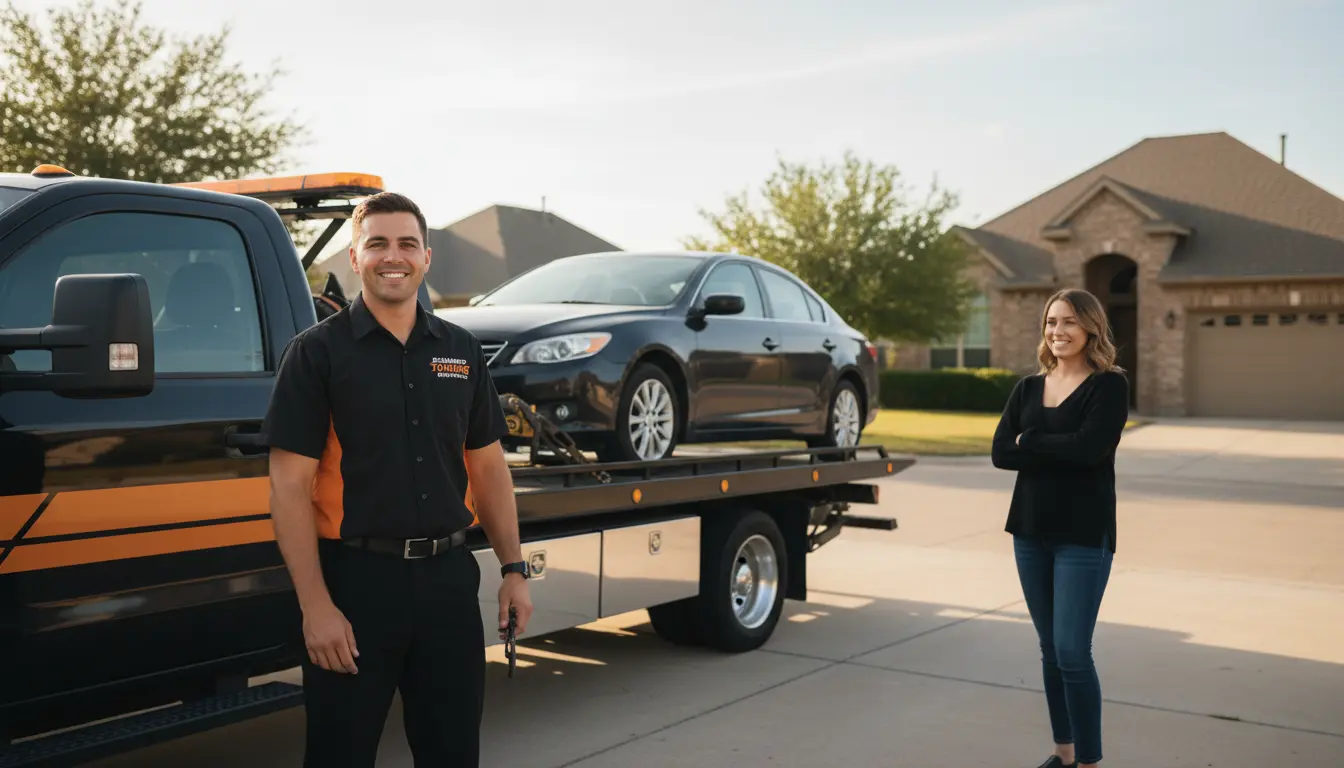
Every year, countless drivers in Edinburg and the surrounding Rio Grande Valley area find themselves stranded on the side of the road, facing expensive and frustrating situations due to a lack of understanding about emergency roadside assistance vs towing. The cost of not knowing the difference can be steep, with some tow bills exceeding $500 for a single incident, not to mention the potential for increased risk of accidents or further vehicle damage when improper towing methods are used.
This scenario is all too common, especially given the extreme heat of the Texas sun, which can cause tire blowouts and battery failures, and the heavy commercial traffic along I-69C/US-281, which increases the likelihood of accidents and breakdowns. For residents and travelers alike, knowing the difference between emergency roadside assistance and towing, and when to use each, can save time, money, and reduce stress.
Edinburg Towing Service, the premier towing and recovery provider in the area, understands the importance of rapid, professional response in these situations. With their expertise, drivers can navigate the complexities of roadside emergencies with confidence, knowing that their safety and the integrity of their vehicle are in good hands.
Understanding Emergency Roadside Assistance
Emergency roadside assistance encompasses a range of services designed to get drivers back on the road as quickly and safely as possible. This can include battery jump starts, tire changes, fuel delivery, and lockout services. The key characteristic of roadside assistance is that it aims to resolve the issue at the scene, minimizing the need for towing.
For instance, a driver experiencing a dead battery in the midst of a hot Texas day can benefit greatly from a professional jump start, avoiding the hassle and cost associated with towing the vehicle to a repair shop. Similarly, a tire change service can quickly and safely replace a flat tire with a spare, getting the driver back on their way without the need for a tow truck.
Towing Services: When They Are Necessary
Towing services become necessary when the vehicle cannot be safely repaired or moved under its own power. This could be due to a serious mechanical failure, an accident, or other circumstances where the vehicle is not drivable. Towing ensures that the vehicle is transported to a repair shop or other destination safely, without causing further damage.
Flatbed towing, for example, is a preferred method for transporting vehicles that are heavily damaged or cannot be lifted by a traditional tow truck. It involves loading the vehicle onto a flatbed trailer, which provides support and stability during transport, reducing the risk of further damage to the vehicle’s suspension, drivetrain, or body.
Technical Process of Towing and Recovery
The technical process of towing and recovery involves several critical steps to ensure safety and efficiency. Dispatch and scene safety are the first considerations, where the tow truck operator assesses the situation to determine the best approach for securing and transporting the vehicle.
Vehicle assessment is crucial, as it helps in identifying the type of tow required, whether it’s a simple hook-up or a more complex recovery operation involving specialized equipment like rollback flatbeds or heavy-duty wreckers. Load angle calculation and proper rigging and securing of the vehicle are also vital to prevent damage during transport.
Data Comparison: Flatbed Towing vs. Wheel-Lift Towing
Choosing the right towing method depends on the vehicle’s condition, size, and type, as well as the distance to be towed. A comparison between flatbed towing and wheel-lift towing can help in making an informed decision.
| Feature/Metric | Flatbed Towing | Wheel-Lift Towing |
|---|---|---|
| Drivetrain Safety | High, as the vehicle is fully supported | Medium, as lifting can stress the drivetrain |
| Setup Time | Longer, due to the need to load the vehicle onto a flatbed | Shorter, as it involves lifting the vehicle by its wheels |
| Ideal Vehicle Type | All vehicles, especially those with all-wheel drive or damaged suspension | Rear-wheel drive vehicles, or those with minimal damage |
Source: TRAA Reference Guide
Expert Insights for Safe Towing and Recovery
Professional tow truck operators and recovery specialists offer several tips for motorists to ensure safety during towing and recovery operations. One crucial piece of advice is to always keep a safe distance from the tow truck and follow its instructions carefully, especially when being towed.
Another important tip is to never attempt to tow a vehicle yourself, especially if it’s heavily damaged or you’re not sure of the proper towing techniques. Improper towing can lead to further damage to the vehicle or even cause an accident, emphasizing the need for professional assistance.
Pricing Structures for Towing Services
The cost of towing services can vary widely depending on several factors, including the type of tow, the distance, and the time of day. Standard hook-up fees can range from $50 to $100, with per-mile rates typically between $2 to $5 after the initial hook-up.
Services like winching, which may be necessary for vehicles stuck in ditch or mud, can add to the overall cost, with prices starting at around $50 to $100 for the service, plus any additional mileage fees. It’s also important to consider that towing services operated during nighttime or under hazardous weather conditions may incur additional fees due to the increased risk and complexity of the operation.
Safety and Standards in Towing and Recovery
Safety is paramount in the towing and recovery industry, with professionals adhering to strict protocols and standards to minimize risks. Certifications like those from WreckMaster or TRAA indicate that a towing service has met specific safety and operational standards, ensuring that customers receive high-quality, reliable service.
The use of DOT-compliant high-visibility gear and lighting systems is also crucial, especially for operations conducted at night or in low visibility conditions, helping to prevent accidents and ensuring the safety of both the tow truck operators and other road users.
Frequently Asked Questions About Towing and Roadside Assistance
What is the difference between emergency roadside assistance and towing?
Emergency roadside assistance refers to services provided to help drivers get back on the road, such as jump starts, tire changes, and fuel delivery, typically without the need for towing. Towing, on the other hand, involves the transport of a vehicle from one location to another, often because the vehicle is not in a drivable condition.
How do I choose a reliable towing service?
Choosing a reliable towing service involves researching local providers, checking for certifications like WreckMaster or TRAA, reading reviews, and ensuring they have the necessary equipment and expertise to handle your specific vehicle and situation.
What should I do if my vehicle breaks down on the highway?
If your vehicle breaks down on the highway, move to a safe location as soon as possible, turn on hazard lights, and call for professional roadside assistance or towing. It’s also a good idea to have an emergency kit in your vehicle, including items like a spare tire, jumper cables, and a flashlight.
Can I tow my vehicle myself?
It’s generally not recommended to tow your vehicle yourself, especially if you’re not experienced with towing or if the vehicle is heavily damaged. Improper towing can cause further damage to the vehicle or lead to an accident. It’s best to call a professional towing service to ensure your vehicle is transported safely.
Professional Towing and Recovery in Edinburg, Texas
In conclusion, understanding the difference between emergency roadside assistance and towing, and knowing when to use each, is crucial for drivers in Edinburg and the surrounding areas. Edinburg Towing Service stands out as a trusted and reliable provider of both emergency roadside assistance and towing services, offering professional, rapid-response solutions tailored to the unique needs of each situation.
By trusting certified recovery professionals, drivers can avoid the costly mistakes and safety risks associated with improper towing and recovery methods. Whether you’re dealing with a simple battery jump start or a complex vehicle recovery, Edinburg Towing Service is equipped to handle the job with expertise and care, ensuring that you get back on the road safely and efficiently.
For all your towing and roadside assistance needs in Edinburg, Texas, and the Rio Grande Valley, look no further than Edinburg Towing Service. With their commitment to safety, reliability, and customer satisfaction, you can drive with confidence, knowing that help is just a call away.